Posts

Showing posts with the label Artificial Intelligence

The case for linguistically inclusive generative AI

Image
The Predominance of English in AI   Did you know that most generative AI projects predominantly focus on the English language? This dominance of English in the realm of AI research and development has inadvertently resulted in a lack of diversity, hindering AI technology's ability to understand and generate in other languages. By directing so much emphasis on English, we are inadvertently curbing the potential of AI to serve a global, diverse audience. The Importance of Linguistic Diversity in AI Expanding the scope of research and development to include multiple languages is crucial. Not only will this foster better communication across cultures, but it will also promote inclusivity and accessibility. Non-English speakers, after all, should be equally entitled to benefit from AI advancements. Diversifying AI can help bridge linguistic divides, encouraging a richer cultural exchange. Such diversity can address the unique needs and preferences of global communities, leading to ...

The AI Revolution in Journalism: Opportunities, Challenges, and the Global Divide

Image
The journalist of the future? A ground-breaking study from the JournalismAI initiative at the London School of Economics and Political Science (LSE) has shed light on the evolving relationship between artificial intelligence (AI) and the world of news. Surveying over 100 media houses spanning 46 nations, the report offers a comprehensive look into how AI, particularly generative AI (genAI) like ChatGPT and Google Bard , is reshaping journalism. Conducted between April and July 2023, the survey revealed a promising statistic: 73% of news outlets see genAI as a transformative tool for the industry. A significant 85% of those surveyed, encompassing journalists, tech experts, and newsroom leaders, have dabbled with genAI for diverse tasks, from coding and image creation to crafting concise summaries. The allure of AI in journalism isn't just about automation. Many respondents highlighted AI's potential to liberate journalists from mundane tasks such as transcribing interviews or ...

Advancing Natural Language Processing Research in Africa: Challenges and Progress

Image
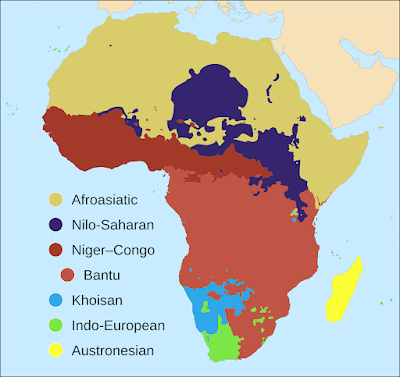
Map of the major language families of Africa (Courtesy: Wikimedia Commons)   Natural language processing (NLP) is a rapidly evolving field, with applications ranging from chatbots to voice recognition systems. However, for a long time, the focus of NLP research has been primarily on widely spoken languages like English, leaving behind the rich linguistic diversity of Africa . There are many challenges faced by researchers in Africa's NLP landscape but there are also some promising initiatives that are working to bridge the gap. The Challenge of Limited Data One of the most significant challenges in African NLP research is the scarcity of training data for African languages . Most available data for NLP models comes from widely spoken languages, such as English, which makes it difficult to develop effective AI tools for African languages. This limited data poses a significant obstacle to progress in this field. Linguistic Diversity Adds Complexity Africa is home to a vast array ...