Posts

Showing posts with the label Africa

France's Waning Influence in Africa: A Shift Towards Autonomy or a New Era of Foreign Relations?

Image
In the intricate tapestry of global geopolitics, Africa, particularly the Sahel region, has emerged as a focal point of shifting power dynamics, notably encapsulated by France's dwindling influence in its former colonies. The departure of French troops from key former colonies like Niger, Mali, and Burkina Faso has not only sparked celebrations among the local populations and newly established military regimes but also ushered in a period of uncertainty and potential recalibration of alliances and power structures. A Legacy Entwined with Shadows from the Past France's historical and often tumultuous relationships with its former African colonies have been punctuated by narratives of exploitation, interference, and neo-colonialism. Despite President Emmanuel Macron's endeavours to navigate the murky waters of France's colonial history and forge pathways towards reconciliation and partnership, the nation's influence on the continent has been on a perceptible decline...

AFCON 2027: Uganda, Kenya and Tanzania co-hosting has implications beyond football

Image
On September 27th 2023, the Confederation of African Football President, Patrice Motsepe, announced in Cairo that East Africa's “Pamoja Bid” had been successful . The announcement meant that Uganda, Kenya, and Tanzania would be the joint hosts for the 2027 Africa Cup of Nations (AFCON).  This historic decision marked a transformative moment for East African football and the broader CECAFA region because it had been 47 years since an East African nation – Ethiopia, to be precise – had hosted the continental football tournament.  The 2027 AFCON will not only be the first to be hosted in the CECAFA region since then but it will also be the first edition co-hosted by three distinct nations. The significance of this shared hosting will be felt in many areas. Not only does it provide a platform to enhance regional unity, but it also magnifies the cultures and capabilities of the three original members of the East African Community.  Moreover, the collaborative nature of the e...

The case for linguistically inclusive generative AI

Image
The Predominance of English in AI   Did you know that most generative AI projects predominantly focus on the English language? This dominance of English in the realm of AI research and development has inadvertently resulted in a lack of diversity, hindering AI technology's ability to understand and generate in other languages. By directing so much emphasis on English, we are inadvertently curbing the potential of AI to serve a global, diverse audience. The Importance of Linguistic Diversity in AI Expanding the scope of research and development to include multiple languages is crucial. Not only will this foster better communication across cultures, but it will also promote inclusivity and accessibility. Non-English speakers, after all, should be equally entitled to benefit from AI advancements. Diversifying AI can help bridge linguistic divides, encouraging a richer cultural exchange. Such diversity can address the unique needs and preferences of global communities, leading to ...

The AI Revolution in Journalism: Opportunities, Challenges, and the Global Divide

Image
The journalist of the future? A ground-breaking study from the JournalismAI initiative at the London School of Economics and Political Science (LSE) has shed light on the evolving relationship between artificial intelligence (AI) and the world of news. Surveying over 100 media houses spanning 46 nations, the report offers a comprehensive look into how AI, particularly generative AI (genAI) like ChatGPT and Google Bard , is reshaping journalism. Conducted between April and July 2023, the survey revealed a promising statistic: 73% of news outlets see genAI as a transformative tool for the industry. A significant 85% of those surveyed, encompassing journalists, tech experts, and newsroom leaders, have dabbled with genAI for diverse tasks, from coding and image creation to crafting concise summaries. The allure of AI in journalism isn't just about automation. Many respondents highlighted AI's potential to liberate journalists from mundane tasks such as transcribing interviews or ...

The Resurgence of Military Coups in Africa: Causes, Implications, and the Road Ahead

Image
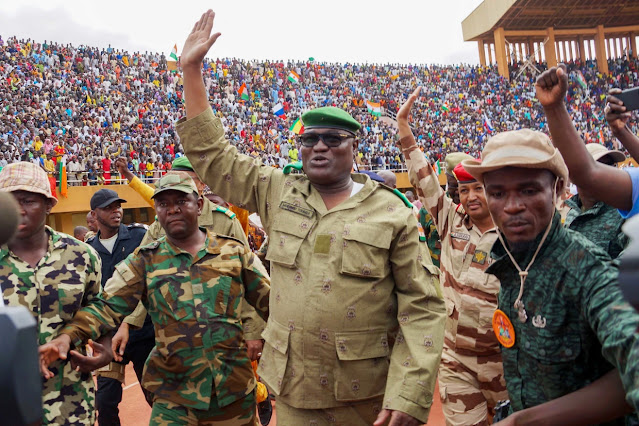
Leaders of the Niger coup at a rally of coup supporters. Courtesy Anadolu Agency  In the past few years, Africa has seen a concerning rise in military coups, marking a significant departure from a period of relative democratic stability. This trend, particularly pronounced since 2020, has seen abrupt leadership changes in several nations due to military interventions. The implications of these coups for democracy, governance, and international geopolitics are profound and demand a comprehensive analysis. A Brief Overview of Recent Coups From Gabon to Niger , Burkina Faso to Sudan , and Guinea to Mali , the continent has experienced a series of coups. Historically, post-independence Africa was no stranger to military interventions. However, the early 2000s saw a decline, making the recent surge reminiscent of the instability many African nations faced in the decades following independence. Factors such as poverty, poor economic performance, and previous coups often set the...

Africa Climate Summit: A United Front for Climate Action

Image
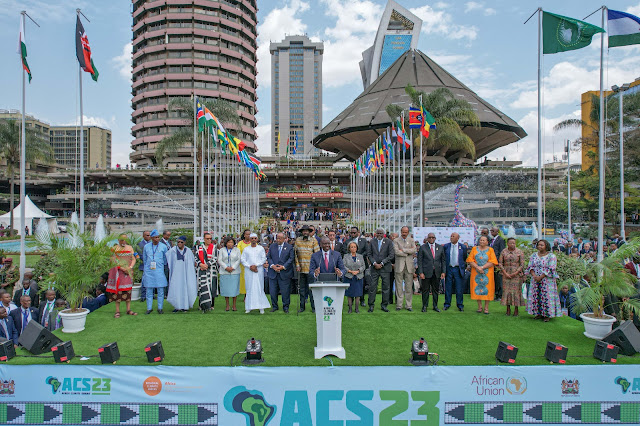
Kenyan President William Ruto addresses the media during the Africa Climate Summit. Photo: Presidential Communication Service, Government of Kenya The inaugural Africa Climate Summit , held from 4th to 6th September in Nairobi, concluded with a resounding call to action. World leaders, international organisations, and civil society converged to discuss the continent's unique position in the global fight against climate change. The summit culminated in the Nairobi Declaration, a document that will serve as Africa's negotiating stance at the upcoming COP28 summit . The three-day event, hosted by the Kenyan government and the African Union, saw participation from global figures including UN Secretary-General António Guterres, President of the European Commission Ursula von der Leyen, and African Development Bank President Akinwumi A. Adesina. Their collective message was clear: Africa is central to the global climate solution. Africa's Unique Position Kenya's President Wil...

Advancing Natural Language Processing Research in Africa: Challenges and Progress

Image
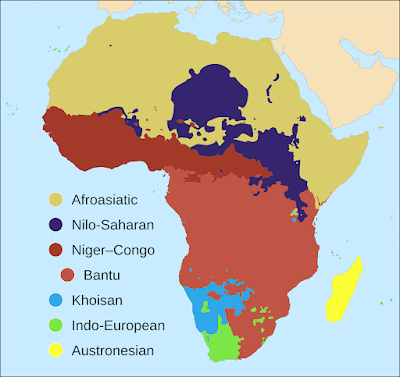
Map of the major language families of Africa (Courtesy: Wikimedia Commons)   Natural language processing (NLP) is a rapidly evolving field, with applications ranging from chatbots to voice recognition systems. However, for a long time, the focus of NLP research has been primarily on widely spoken languages like English, leaving behind the rich linguistic diversity of Africa . There are many challenges faced by researchers in Africa's NLP landscape but there are also some promising initiatives that are working to bridge the gap. The Challenge of Limited Data One of the most significant challenges in African NLP research is the scarcity of training data for African languages . Most available data for NLP models comes from widely spoken languages, such as English, which makes it difficult to develop effective AI tools for African languages. This limited data poses a significant obstacle to progress in this field. Linguistic Diversity Adds Complexity Africa is home to a vast array ...

Egypt's Waning Influence

Egyptian Foreign Minister Mohammed Kamel Amr resigned Tuesday, becoming the most high-profile minister to step down since protests against the rule of President Mohammed Morsi began over the weekend. Amr's resignation came after the Egyptian military issued an ultimatum Monday, demanding that Morsi and the ruling Muslim Brotherhood start a dialogue with opposition members within 48 hours, or risk the military stepping in to impose a "political roadmap" on all parties. This move comes amid the latest in a series of political crises in Egypt since the ouster of former President Hosni Mubarak in February 2011. The political turmoil facing Egypt, its political class and its powerful military has become almost a given, with all sides turning to public displays of unrest and emotion as often as they do to the democratic process. And as Egypt's political system evolves, it is becoming clear that -- with the exception of a few critical issues, including Gaza, the Suez Cana...

Is Information Technology all its been hyped to be?

Image
These days its hard to open a newspaper, watch TV or traverse the information superhighway without coming across an article or blog post praising IT and what a positive impact it has on business the world over or how information technology is literally capable of solving most of the problems known to man. However, despite the undeniable importance of IT in today’s world, sometimes the role (and importance) of IT seems to be overstated for different reasons and in a number of ways. A graphical representation of the Digital Access Index.  See how poorly Africa is  doing (Source: International Telecommunications Union) The rapid growth of IT and ICT use has led to a digital divide between those who have and those who do not have access to IT facilities and services especially in the poorest parts of the world. While the importance of IT is being discussed, it is worthwhile to realise that in some situations only a small section of the population can access this IT and thus ...

And the Kony 2012 juggernaut rolls on

Image
I spent yesterday trying to write a post on my views on Invisible Children's   KONY 2012 video that has gone viral and garnered millions of views (38,430181 on YouTube as I write this). More specifically, I wanted to write about what I thought was wrong with both the approach of the film-makers and the way people without the slightest clue about the LRA (besides the misinformation gleaned from KONY 2012) were taking up the Stop Kony cause with such fervour. However, Twitter could not let me do that in peace because almost every 5  minutes I received links to articles and blog posts reacting to the Invisible Children campaign. Posts like this one by Michael Wilkerson guest posting at Foreign Policy , and this post by  Ugandan blogger Angelo Izama are just two of the many that are out there echoing my feelings.  There is also this video from Ugandan blogger Rosebell Kagumire As a result I feel what I had to say has ...